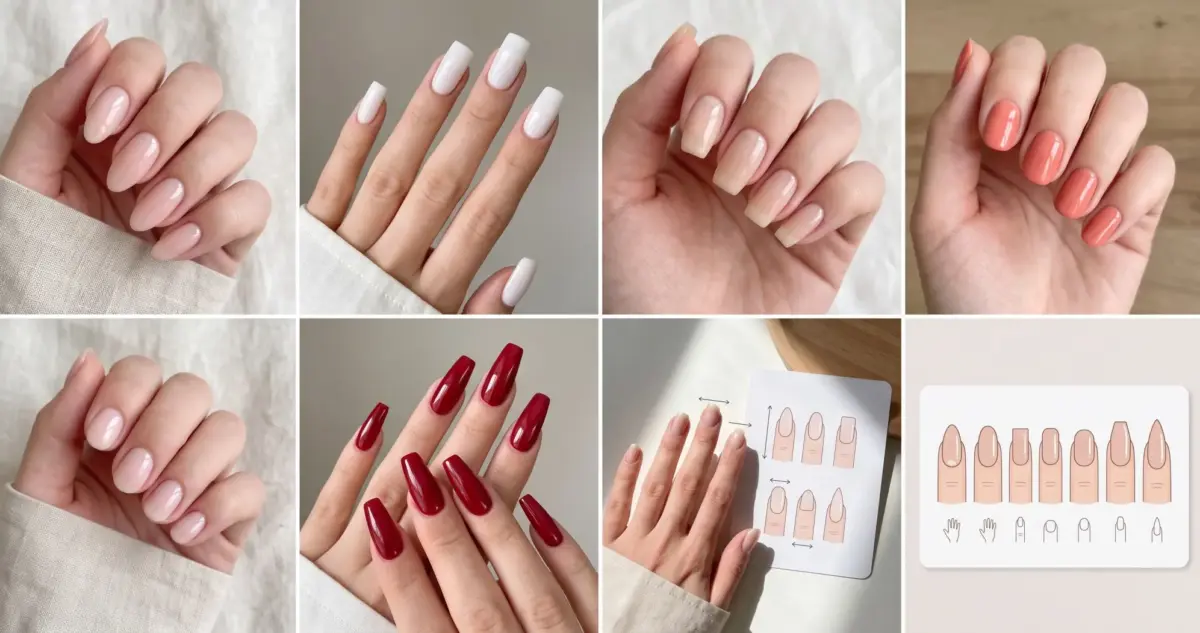
The most useful nail shape is the one that looks good to you and feels comfortable through an ordinary day. A tapered almond tip creates a different silhouette from a short square edge, but neither is automatically better for a particular hand. Your natural nail bed, available length, daily activities, and preferred look all play a part.
If you have ever saved a beautiful manicure and discovered that the shape felt awkward once you tried it, this guide will help. We will compare options for different finger and nail-bed proportions, then cover how to choose a shape you can maintain without unnecessary filing or breakage. For a broader visual comparison, see our guide to 15 nail shapes.
Start with three things: nail bed, free edge, and daily routine
First, look at the nail plate, the part of your natural nail you can see. It may be relatively wide, narrow, long, or short. Next, check how much free edge extends beyond the fingertip. A true almond taper usually needs more length than a round or squoval nail; trying to carve a pronounced point into a very short natural nail can mean removing too much from its sides.
Finally, consider your hands at work. Short, softly rounded tips tend to be easier to manage when you type, cook, lift equipment, or care for children. Longer shapes allow dramatic nail art but can catch on clothing or put more leverage on the nail when bumped. The right balance is personal.
Nail Shape for Short Fingers
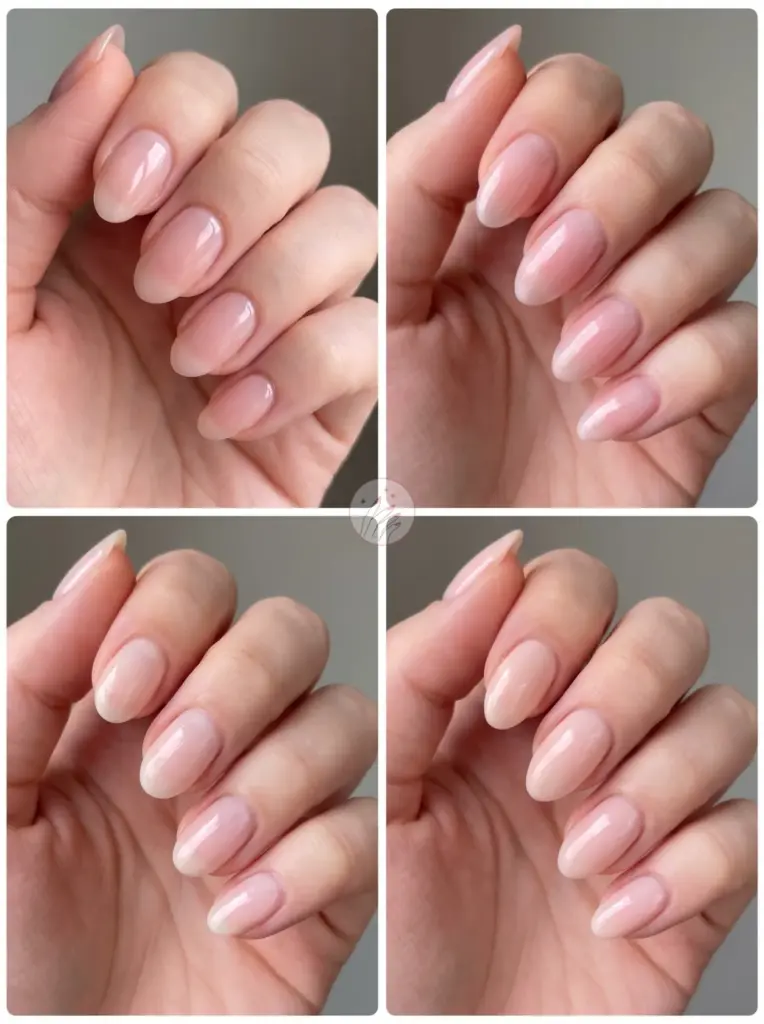
If you want to create the appearance of extra length, start by looking at oval or gently tapered almond shapes. Their lines guide the eye toward the tip. A sheer nude, blush, or a narrow French tip can support the effect, although a dark or bright polish can look just as intentional.
Salon tip: ask for a subtle taper rather than an extremely pointed tip, especially if your nails are naturally short. A small amount of length and a softened oval edge may deliver the shape you want with less maintenance than long extensions. The original reference image shows this streamlined approach.
Nail Shape for Long Fingers
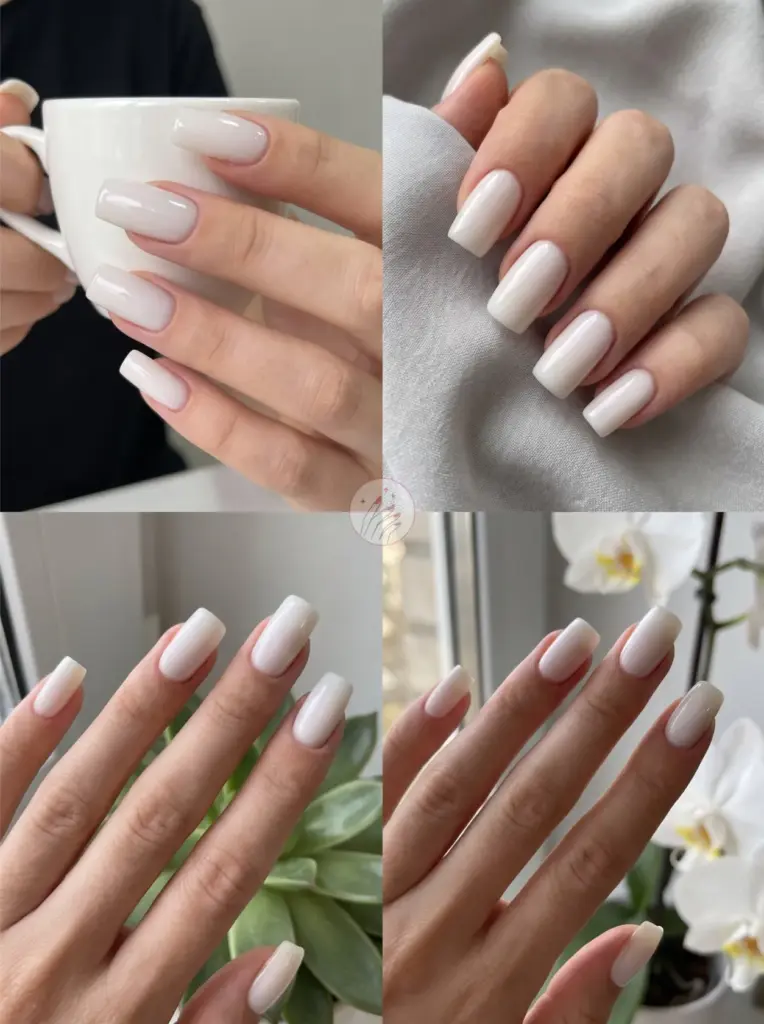
Square and squoval nails create a crisp, defined outline, particularly when the free edge is even across all fingers. A milky white manicure emphasizes the clean shape without relying on intricate artwork. If you prefer something softer, an oval or almond is equally suitable.
Salon tip: compare a straight square tip with a squoval before your technician finishes filing. The difference is mostly at the corners, yet it changes both the look and how easily the edges may catch on fabric. You are not restricted to a particular shape because your fingers are long.
Best Shape for Wide Nails
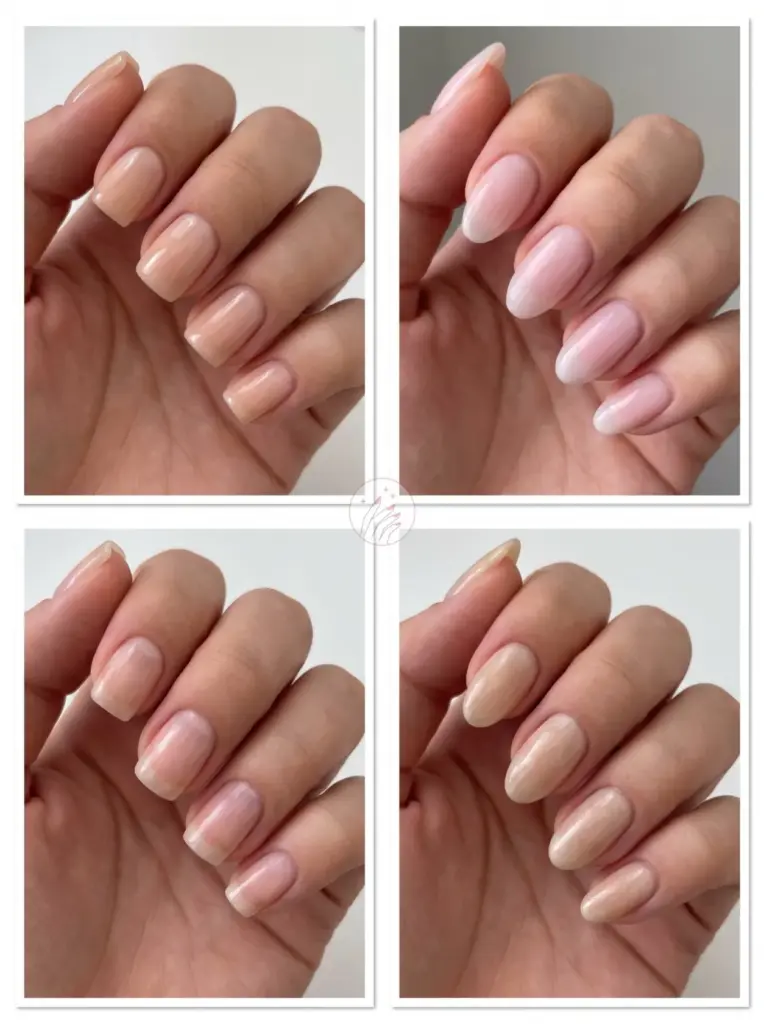
On a wider nail plate, an oval outline can soften the corners, while a tapered almond creates a narrower-looking tip when there is enough free edge. A soft square is another good option if you like clean edges and prefer keeping your nails short. The original image demonstrates one possible shape and polish combination rather than a fixed rule.
Salon tip: avoid asking a technician to file deeply into the natural sidewalls simply to make the nail look narrower. Healthy side edges help support the nail. A slightly longer free edge or a softly curved tip can change the visual effect without aggressive filing.
Best Shape for Narrow Nails
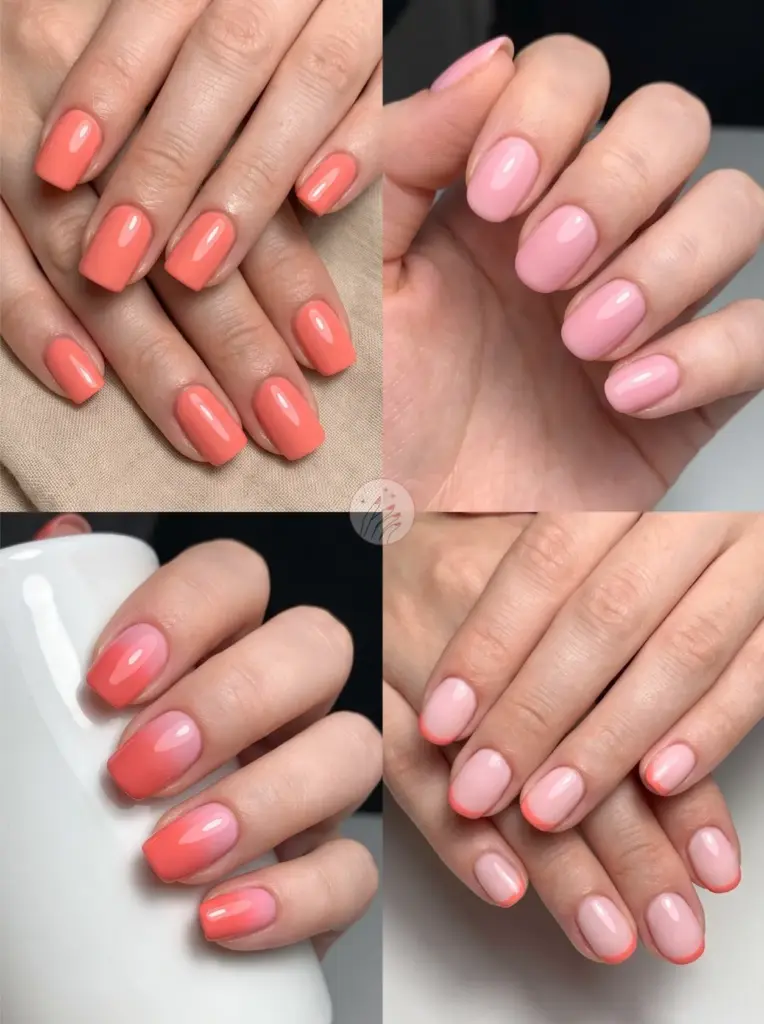
Round and squoval shapes make an easy starting point for narrow nail beds. A short rounded edge follows the fingertip and gives a simple, neat finish, while squoval keeps a more defined top line. If you like dramatic shapes, a medium almond can also work when the natural length and enhancement structure allow it.
Salon tip: use the color and finish to change the overall look. An opaque coral makes the nail stand out, while a sheer pink feels subtle. The color is a style choice, not a requirement for a particular nail width.
Flattering Nail Shape for Small Hands
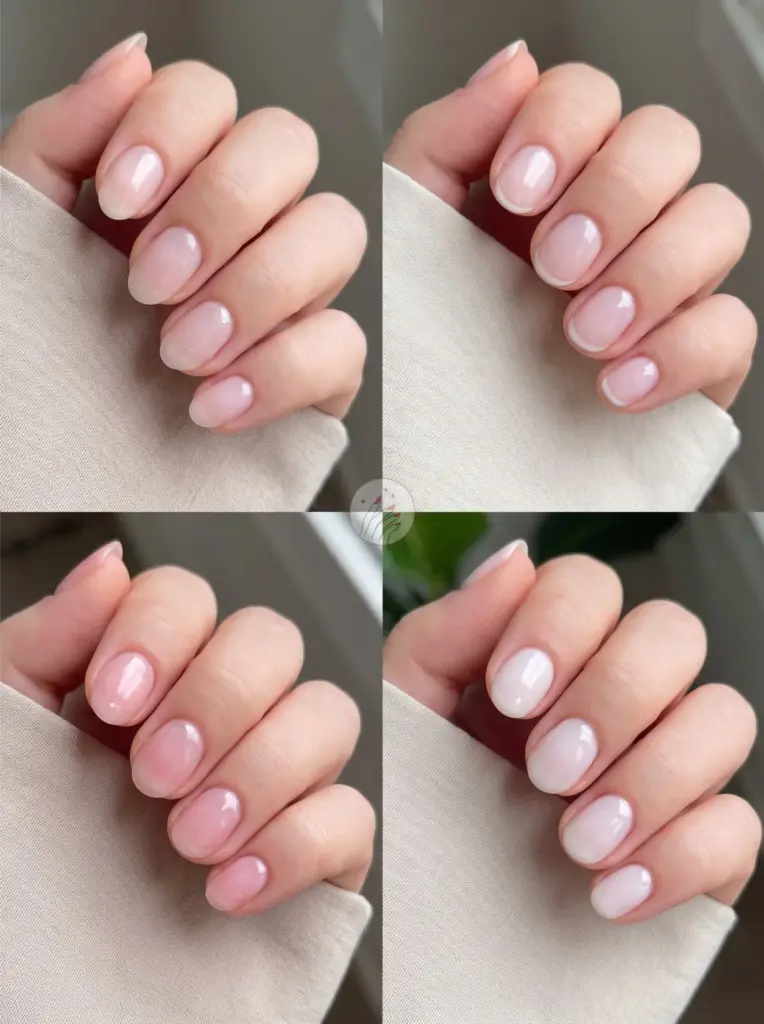
Short oval, round, and squoval nails are useful options for petite hands because they can be worn at a manageable length. The original milky-pink design shows a close-to-the-fingertip manicure with softly finished edges. A small hand can also wear longer almond nails if that is the style you prefer.
Salon tip: select length by measuring how far the nail extends beyond your fingertip, not by copying the apparent size of nails in a photo. A reference taken from a different camera angle may make a moderate extension seem much longer or shorter than it is.
Best Nail Shape for Large Hands
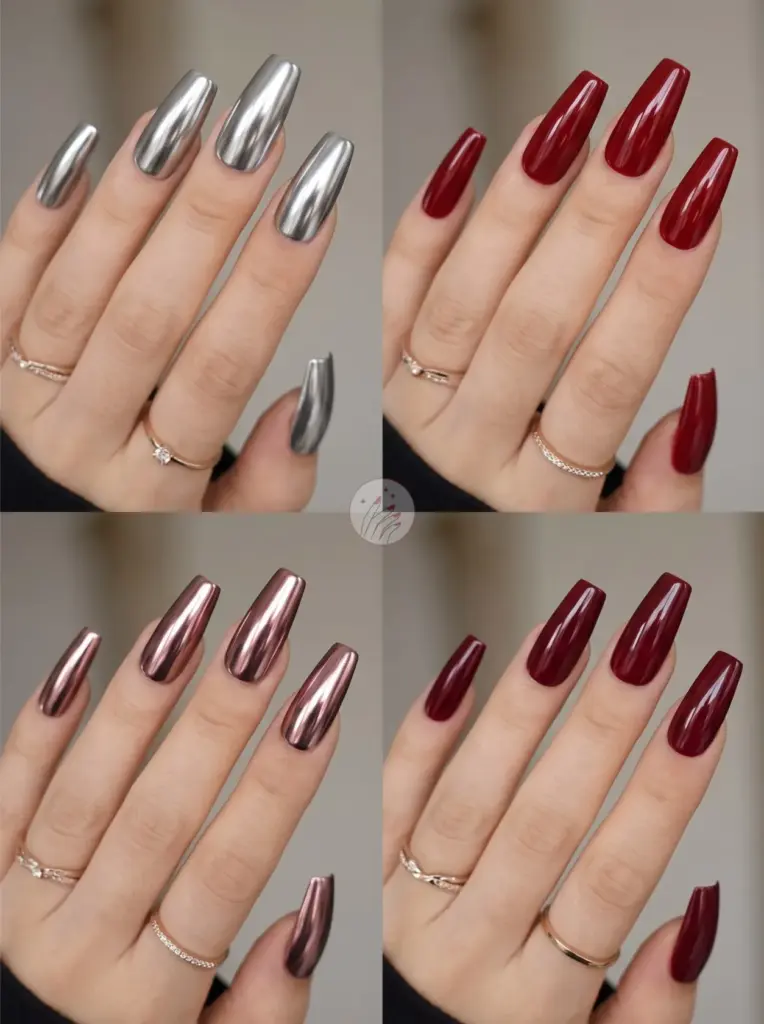
Long coffin, almond, and square designs can make an eye-catching manicure, but hand size does not dictate how bold the nails should be. A glossy burgundy medium almond might be striking; a short neutral squoval could be just as polished. Choose the look you enjoy, then adjust the length for comfort.
Salon tip: if you want a long coffin tip, ask how the technician will support the structure and how often the set will need maintenance. Long free edges are more vulnerable to knocks, regardless of hand size. A shorter coffin-inspired shape can give a similar flat-tip effect with less length.
How to Find My Nail Type
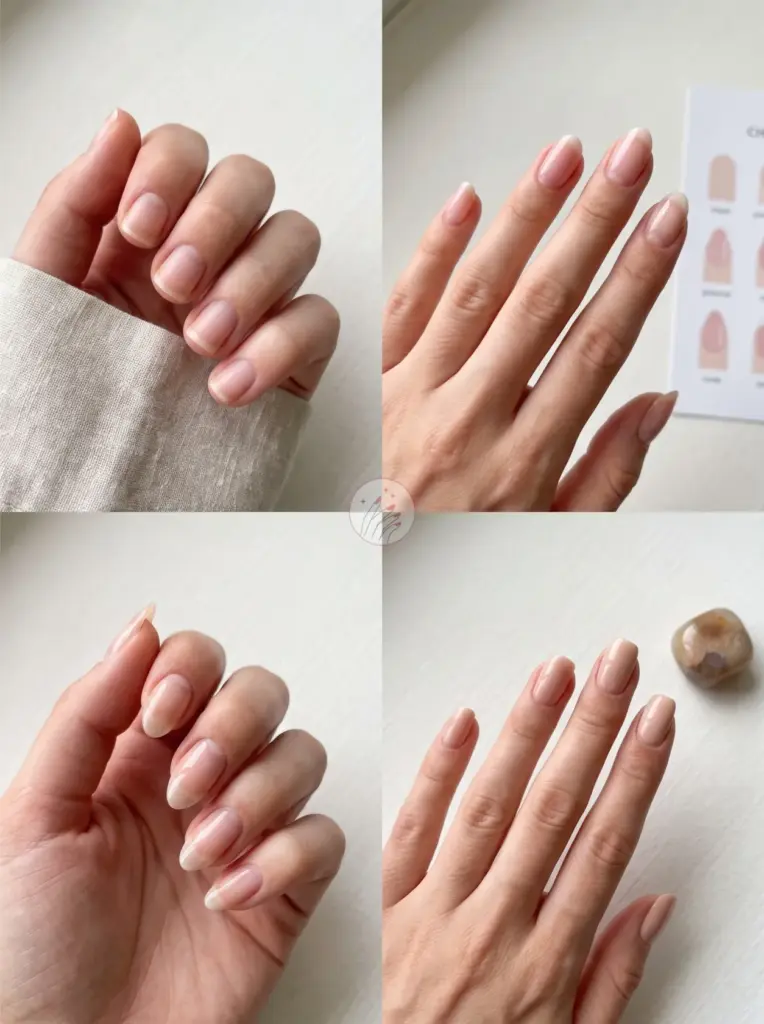
You only need a clear look at your natural nails. With the hands relaxed and clean, note whether the nail beds are relatively wide or narrow, how curved the sidewalls are, and how much free edge you usually keep. You can compare the nails on each hand; they may not all grow identically.
A quick test is to file a single nail into a soft squoval or oval outline and see which edge feels comfortable. Do not file down deeply along the sides. If your nails split, peel, or break easily, choose a shorter length and discuss persistent changes with a dermatologist rather than trying to hide them under extensions.
Your Complete Nail Shape Guide
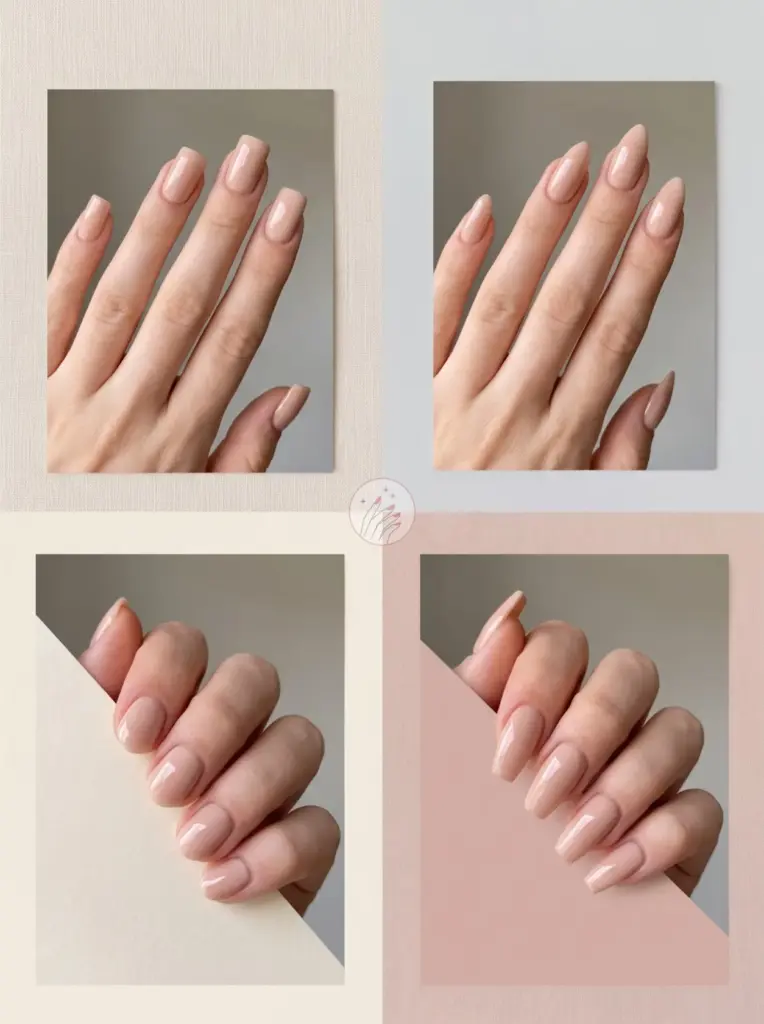
Use this compact comparison with the original nail-shape reference image:
– Round: a curved tip following the fingertip; easy for very short natural nails. – Oval: a longer, soft curve; creates a gentle tapered impression without a point. – Square: a straight tip with defined corners; crisp and graphic, but corners may catch. – Squoval: a flat-ish tip with softened corners; a practical middle ground. – Almond: tapered sides and a rounded point; generally easier to form with some free-edge length. – Coffin or ballerina: tapered sides and a flat end; often chosen for longer extensions. – Stiletto: a pronounced pointed tip; dramatic and typically higher maintenance.
There is no universal “most flattering” shape. The best choice depends on the look you want, how the nail grows, and what feels practical. If you love square nails, you do not have to abandon them because a guide suggests oval for your hand type. For an in-between option, explore our squoval nail ideas.
How to file your nails without weakening the edges
Use clean, sharp clippers if you need to reduce length, then smooth the free edge with a nail file. The American Academy of Dermatology recommends trimming fingernails almost straight across and softening the corners. Work gently rather than repeatedly sawing hard at the sides, and stop if the nail becomes tender or the edge starts to split.
For natural nails, round, oval, square, and squoval can usually be created without major structural changes. Very long almond, coffin, or stiletto looks may call for enhancements if your natural nails cannot hold that shape at the desired length. Ask a professional to assess whether an extension is suitable.
Common nail-shape mistakes to avoid
A reference photo can look beautiful while hiding practical details. Before agreeing to a shape, ask about the free-edge length, the corner finish, and how the design will look as the nail grows. Filing too much from the sidewalls, choosing a long shape for a very hands-on routine, or leaving corners sharp enough to snag are all avoidable problems.
If you are changing from long square nails to a shorter oval, allow the natural edge to determine what is possible without aggressive reshaping. A small adjustment now is better than making the nail sore just to match a picture precisely.
Frequently asked questions about nail shapes
Which nail shape is easiest to maintain?
Short round or squoval nails are good places to start because they have a manageable free edge and softened corners. Your routine and nail strength still matter more than the name of the shape.
Are almond nails good for short fingers?
They can create a tapered appearance, but you need enough nail length to shape an almond comfortably. Short oval nails are a useful alternative if you do not want extensions.
Do square nails break more easily?
Sharp corners can catch on clothing or objects. A squoval edge keeps much of the square appearance while softening the points. Actual breakage also depends on nail condition, length, and daily wear.
Can nail shape change how my fingers look?
Yes, visually. A tapered tip, flat edge, or rounded corner changes the line of the manicure. It does not change your hand’s natural proportions, and there is no obligation to make fingers appear longer or narrower.
Final thoughts
Try the shape you enjoy at a manageable length before committing to extensions. A short oval or squoval is an easy starting point, and you can add taper, length, or more dramatic nail art as you learn what feels comfortable. A good manicure should complement your routine as much as your outfit.
Editorial source for nail trimming and health: American Academy of Dermatology: How to trim your nails.