
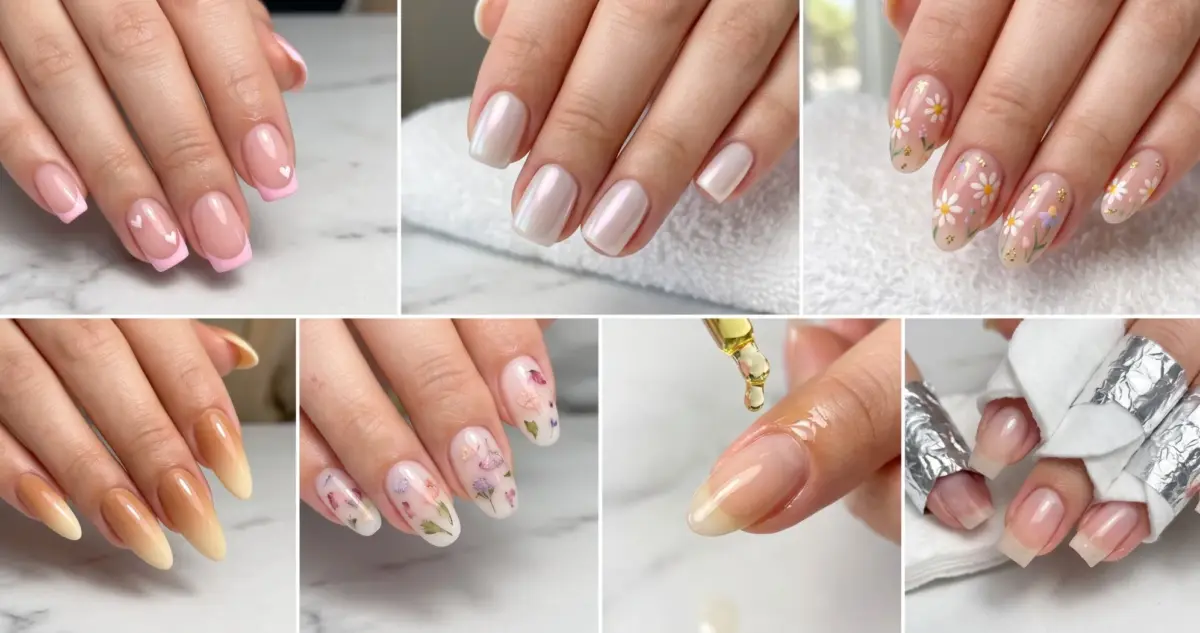
Acrylic nails can be short and understated, softly shaped for everyday wear, or long enough for detailed nail art. Their versatility comes from the way a nail technician builds and shapes the enhancement before applying polish or decoration. The finish may look delicate, but choosing the right length and maintaining it properly makes a real difference to how comfortable the set feels.
This guide brings together five acrylic manicure ideas already featured in our gallery, plus straightforward advice on fills, cuticle care, and removal. If you are getting acrylics for the first time, the most useful decisions are the length, the shape, and whether you can comfortably manage that length during your usual routine.
What are acrylic nails, and how do they work?
Acrylic enhancements are typically made with a liquid monomer and powder that form a hardened material on the nail. A technician can use it to reinforce the natural nail or create an extension with tips or forms. Once the product has set, they refine the shape and add polish, a colored acrylic finish, or nail art.
Unlike a regular polish manicure, an acrylic set adds structure. That can make certain lengths and detailed shapes possible, but the additional product also needs attention as the natural nail grows. Good preparation should not involve aggressively thinning the natural nail or cutting away healthy cuticle tissue.
Cute Pink French Tip Acrylic Nails
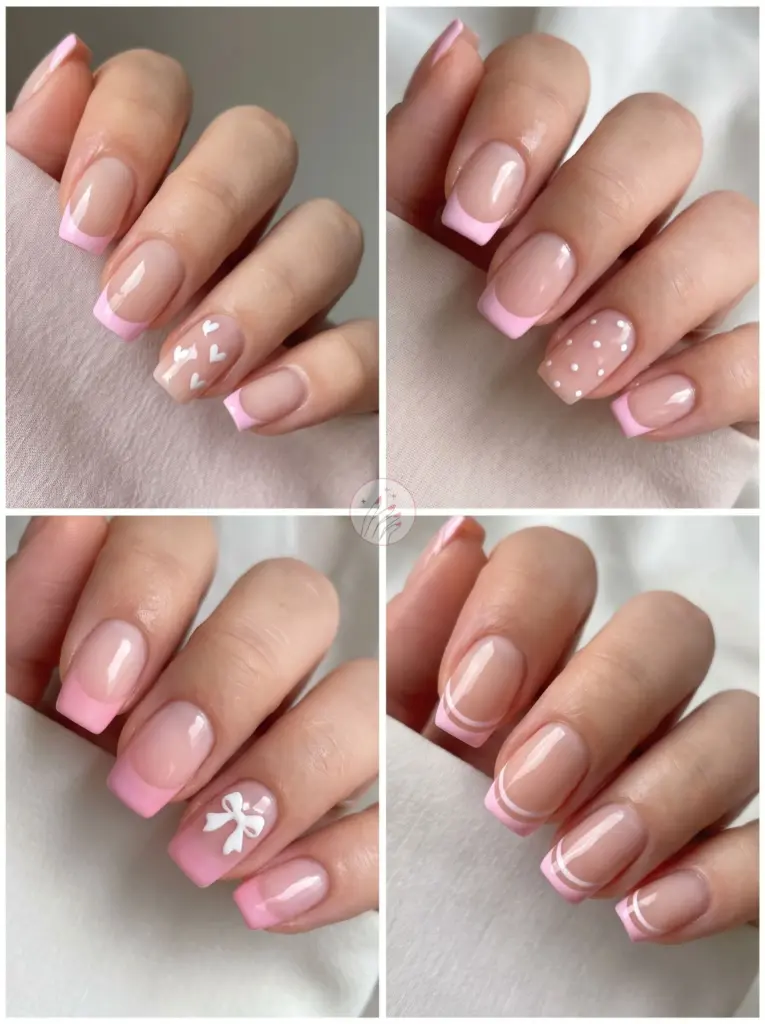
The original design pairs a sheer nude base with very fine pastel-pink French tips. Small white hearts on a couple of nails keep the look playful without hiding the tidy, rounded-square shape. It is an easy reference to bring to a salon when you want a soft manicure that still has a visible detail.
Ask your nail technician for: a short square or squoval extension, a translucent pink-nude base, and a micro French tip rather than a thick stripe. Place the hearts on one or two accent nails so the fine tips remain the focus. If your fingers do a lot of typing or hands-on work, keep the free edge short enough that the corners do not catch.
For more color and tip combinations, see our French tip nails guide.
Short Minimalist Glazed Donut Acrylic Nails
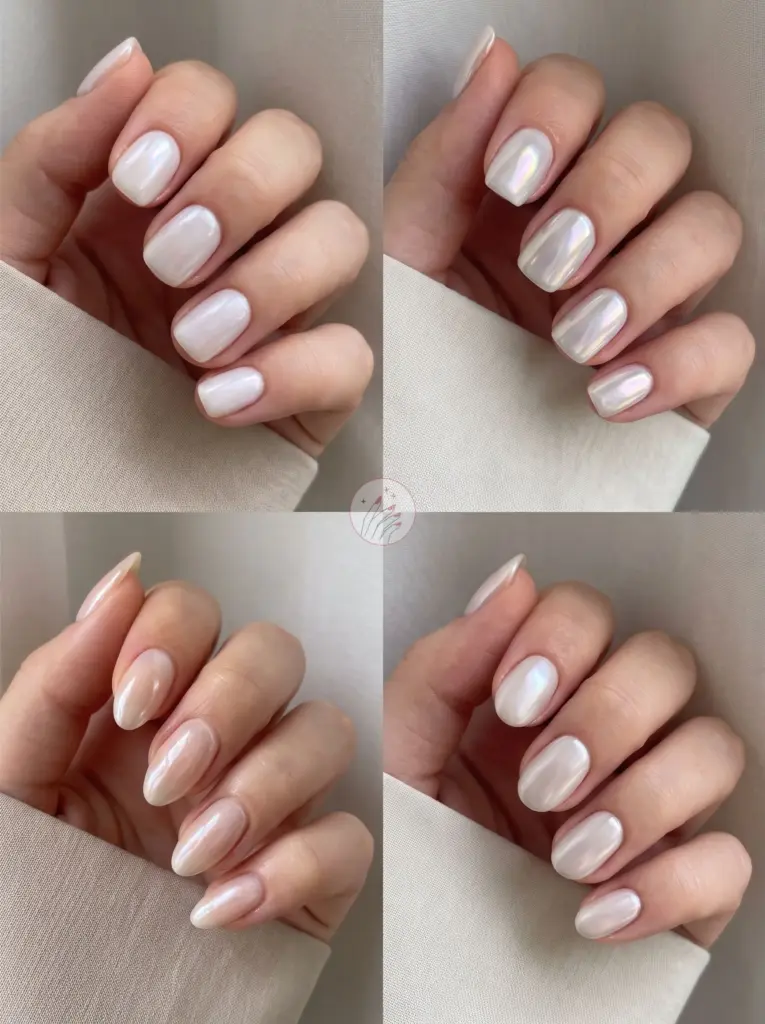
A milky white base with a soft pearlescent sheen makes these short acrylics look luminous without a busy pattern. The shape is natural-looking, with gently softened edges that work with the subtle chrome effect. The shimmer changes in different lighting, so the manicure has dimension even when every nail matches.
Ask your nail technician for: thin-looking, balanced short enhancements, a milky translucent base, and a fine pearl chrome finish. Chrome powders usually need the correct gel topcoat system, so let the technician match the products they use. A very opaque white underneath creates a different look; request a sheer base if you want the original glazed effect.
Pretty Pastel Floral Girly Acrylic Nails
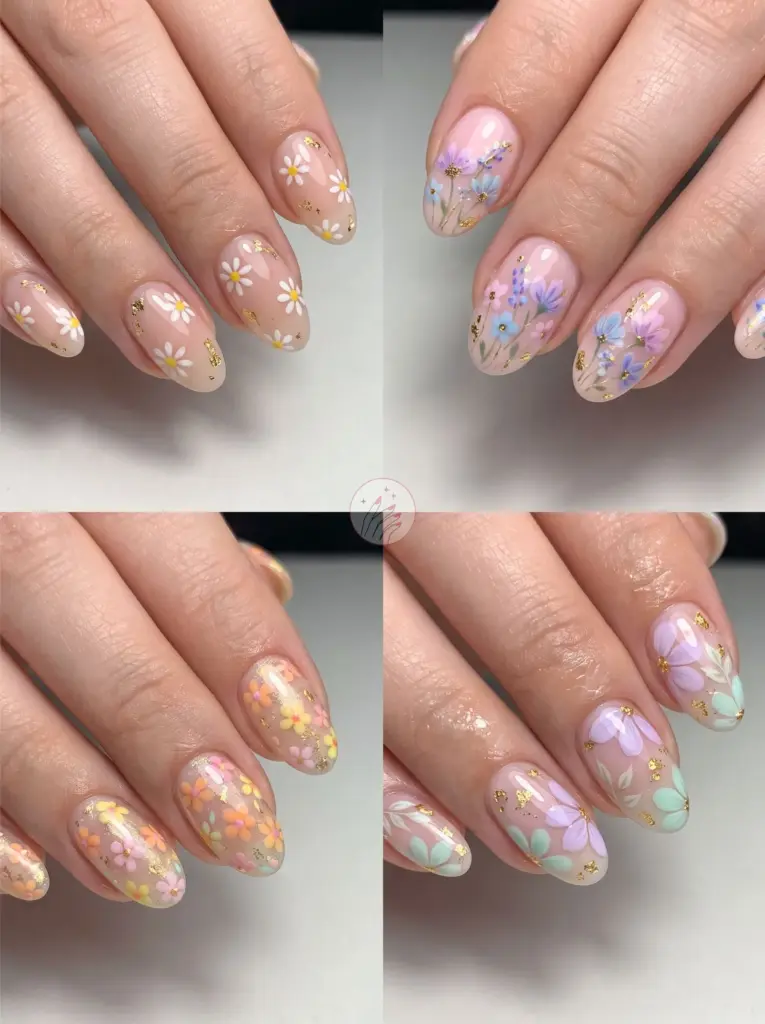
This manicure uses a blush base, delicate pastel flowers, and small touches of gold leaf. The slim oval outline leaves room for the petals without making the overall set look crowded. The flowers can be scattered across several nails, but concentrating them on two accents often makes the artwork easier to appreciate.
Ask your nail technician for: soft lilac, pink, and cream flowers painted with a fine brush over a sheer blush base. Keep the gold leaf pieces tiny and seal the decoration beneath an appropriate topcoat so the surface feels smooth. For another take on this color family, browse our pastel nail ideas.
Long Almond Ombre Nude Acrylic Nails
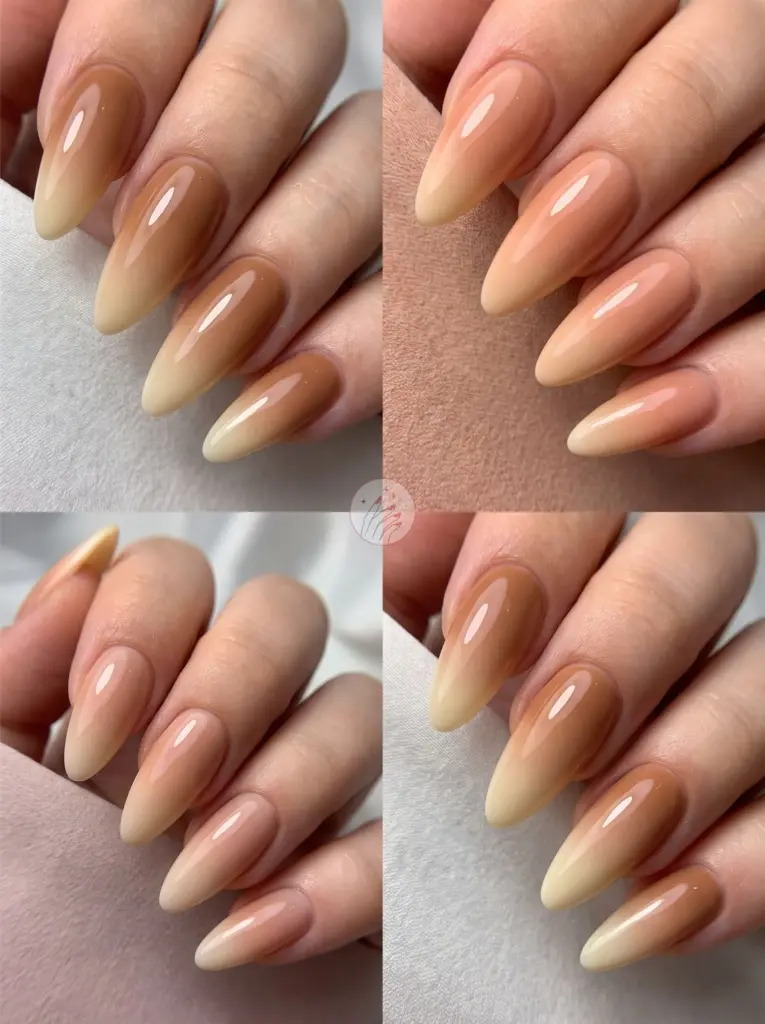
Long almond acrylics leave enough space for a gradual blend from warm caramel near the cuticle to creamy vanilla at the tip. The tapered silhouette is the main feature here; the color transition softens it and avoids a hard line across the nail. This style works especially well when you prefer neutral colors but want a more noticeable shape.
Ask your nail technician for: an almond tip with smoothly balanced sidewalls and an ombré fade tailored to your preferred nude shades. If long extensions are new to you, consider trying a medium length first. The best shape is one you can wear without repeatedly knocking the tips against everyday objects. More gradient options appear in our ombré nails guide.
Soft Sheer Milk Bath Acrylic Nails
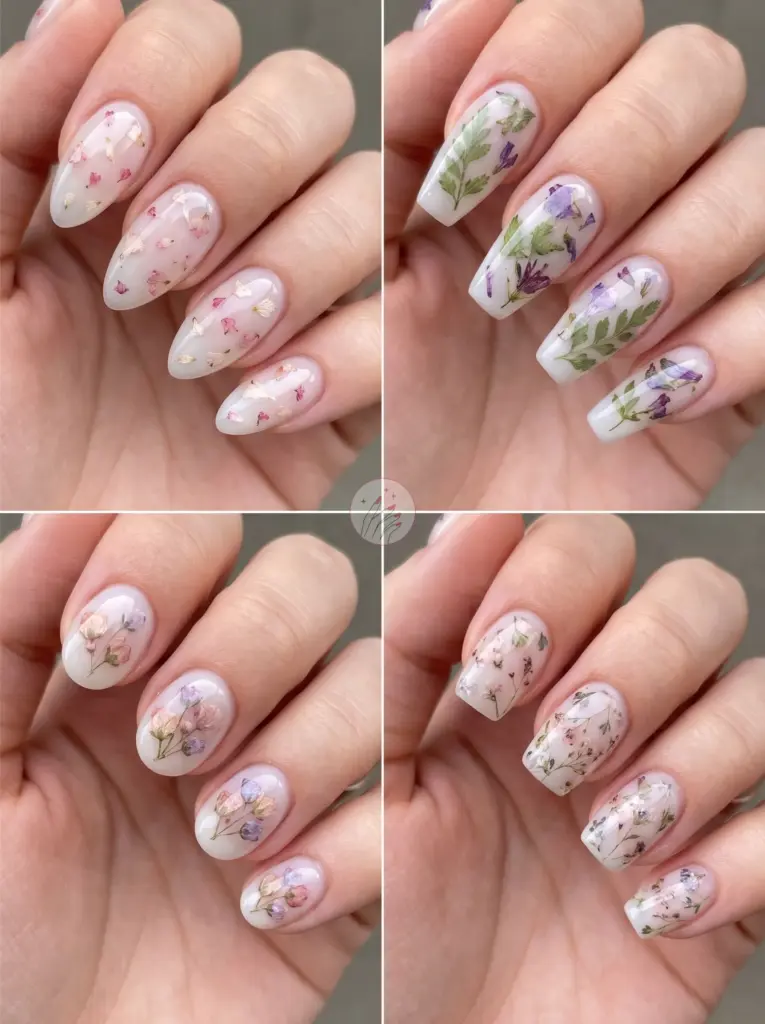
Milk bath nails have a translucent, cloudy base that lets small floral details appear suspended under the surface. In the original design, tiny blush, lilac, and green petals create a botanical effect without covering the entire nail. The result is gentler than a full floral print, especially on medium-length oval or almond nails.
Ask your nail technician for: a softly milky base and very small, flat encapsulated floral elements. Check that the materials are intended for nail enhancements; thick decorations or poorly sealed edges can create unwanted bulk. An even, smooth surface makes this design more comfortable to wear and easier to maintain.
How long do acrylic nails last, and when do they need a fill?
The enhancement does not grow; your natural nail grows underneath it. As that happens, a gap becomes visible between the enhancement and the cuticle area. Many people return for maintenance roughly every two to three weeks, although the right interval depends on growth, lifting, and the condition of the set. The American Academy of Dermatology notes that artificial nails may need touch-ups in that range.
A fill is not simply a fresh coat of polish. The technician should check for lifting, cracks, trapped moisture, or damage and decide whether a fill or replacement is suitable. Do not glue down a lifted edge or cover a suspicious change in nail color. If a nail becomes painful, swollen, or unusually discolored, stop cosmetic treatment and seek professional medical advice.
Daily Hydrating Cuticle Oil Nails Care
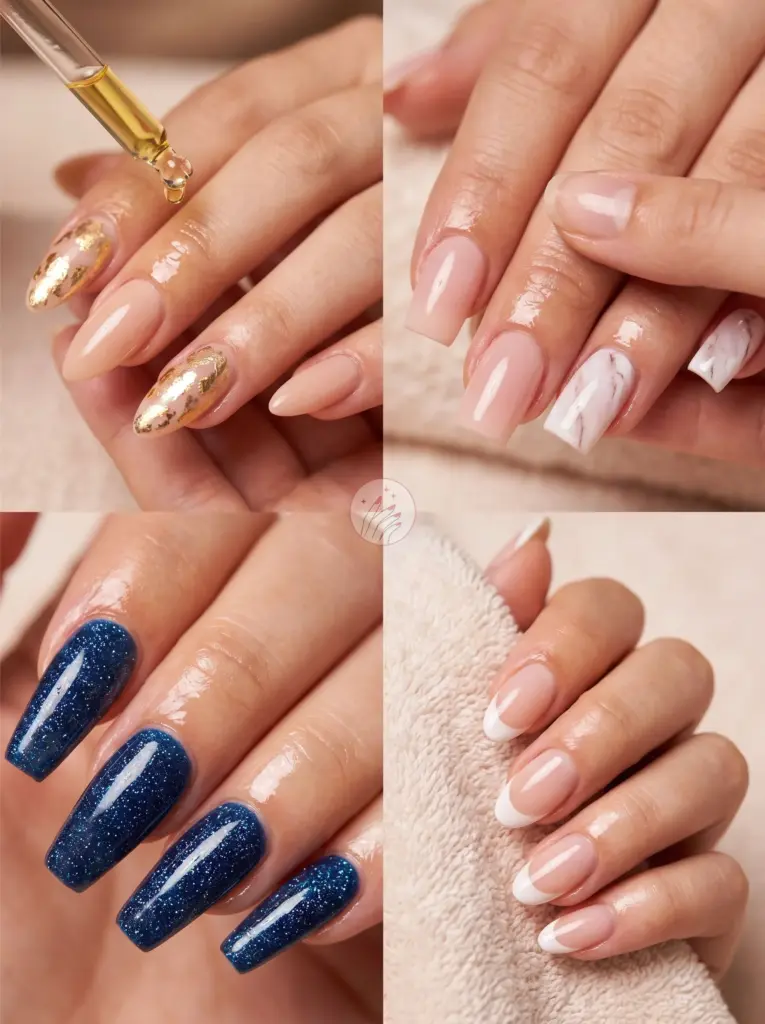
The existing image shows oil being applied around the nail perimeter. That is a useful part of a care routine because frequent handwashing, polish removers, and dry weather can leave the surrounding skin uncomfortable. A small amount of cuticle oil or plain moisturizer helps keep the skin from feeling tight and dry.
Try this routine: apply a little oil to the skin around the nails, massage gently, and use hand cream after washing. Wear gloves for extended dishwashing or cleaning. Avoid picking at the skin and never cut away healthy cuticles; they help protect the nail area. Oil can moisturize the skin, but it cannot repair a poorly attached acrylic enhancement or prevent all lifting.
Gentle Acetone Soak Off Nails Removal
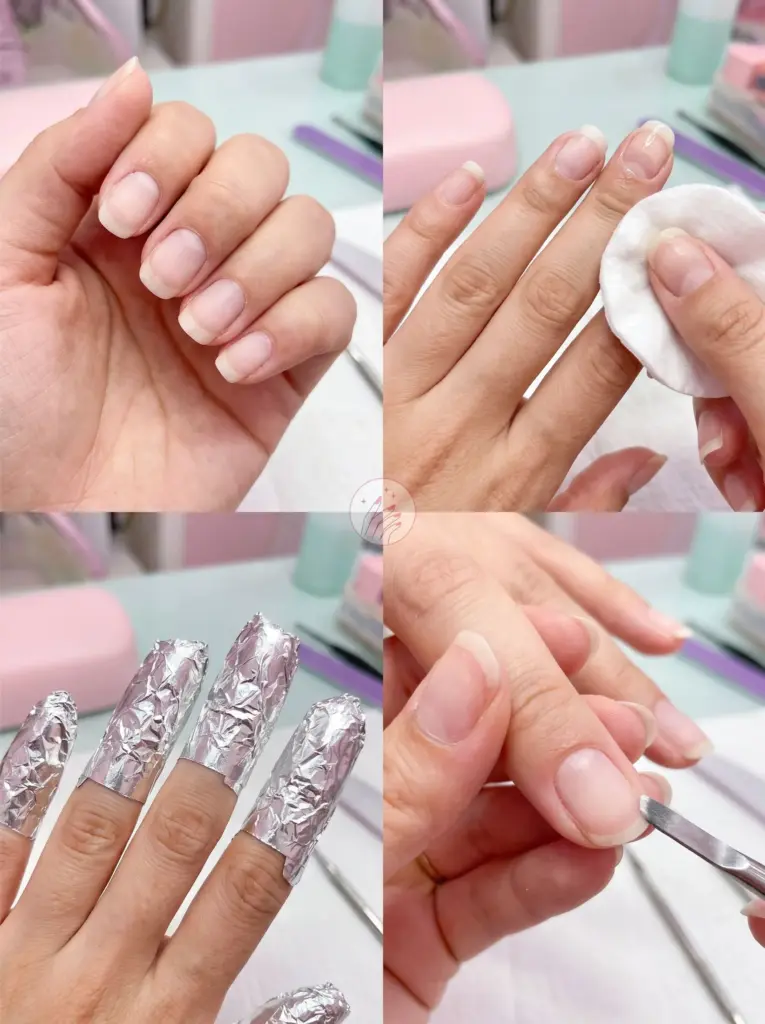
The original image illustrates acetone-soaked cotton and foil wraps. Acrylic removal needs more caution than a fixed timer: different products, thicknesses, and overlays respond differently. A professional may shorten the extension and reduce the bulk of the enhancement before carefully soaking or filing the remaining product, depending on the system used.
The safer rule is not to pull, pry, or scrape off resistant material. If the acrylic does not soften as expected, it needs reassessment rather than force. Acetone can dry and irritate the surrounding skin, and aggressive filing can thin the natural nail. If you are unsure what product is on your nails, book a removal with a qualified nail technician instead of trying to remove it by trial and error.
After removal, wash the hands gently and moisturize the nails and surrounding skin. If your natural nails feel thin or tender, allow time for them to recover before another enhancement. Redness, swelling, significant pain, or nail separation deserves medical attention.
How to choose the right acrylic length and shape
Short square and squoval enhancements are practical choices when you use your hands constantly. Oval nails soften the outline, while almond gives the tip a more tapered profile. Coffin and very long almond styles offer more space for artwork but usually require more adjustment in daily activities. The goal is not to follow a rule about hand size; it is to choose a shape that looks how you want and works with your natural nail and routine.
Bring a reference image showing the length as well as the artwork. Tell your nail technician about typing, lifting, sports, or other activities that put pressure on your fingertips. Those details help them recommend an appropriate structure and length.
Frequently asked questions about acrylic nails
Do acrylic nails damage natural nails?
They can. Excessive filing, poor application, picking, and rough removal may weaken the natural nail. A trained technician, careful maintenance, and breaks when needed can reduce some risks, but no enhancement is completely risk-free.
Can I have short acrylic nails?
Yes. Short acrylics can support French tips, sheer glazed finishes, and small floral accents. You do not need long extensions to wear acrylic designs.
Can I remove acrylic nails with acetone at home?
Some acrylic systems are removed with acetone, but the process varies. If you cannot identify the product or it does not soften easily, professional removal is the safer choice. Do not force a lifted edge or pry off the enhancement.
What if acrylic products make my skin itch or swell?
Stop using the suspected product and seek guidance from a healthcare professional. Some ingredients used in artificial nails can cause irritation or allergy. Tell the clinician what nail products were applied.
Final thoughts
Acrylic nails work best when the design, shape, and maintenance routine suit the person wearing them. Start with a manageable length, save the reference that matches the finish you want, and plan for fills or removal before the enhancement begins to lift. The pink micro French, glazed short set, pastel flowers, nude ombré, and milk bath designs above show how different acrylics can look without sacrificing everyday comfort.
Editorial sources for the care and removal guidance: American Academy of Dermatology: Artificial nails; AAD: Manicure safety; FDA: Nail care products.